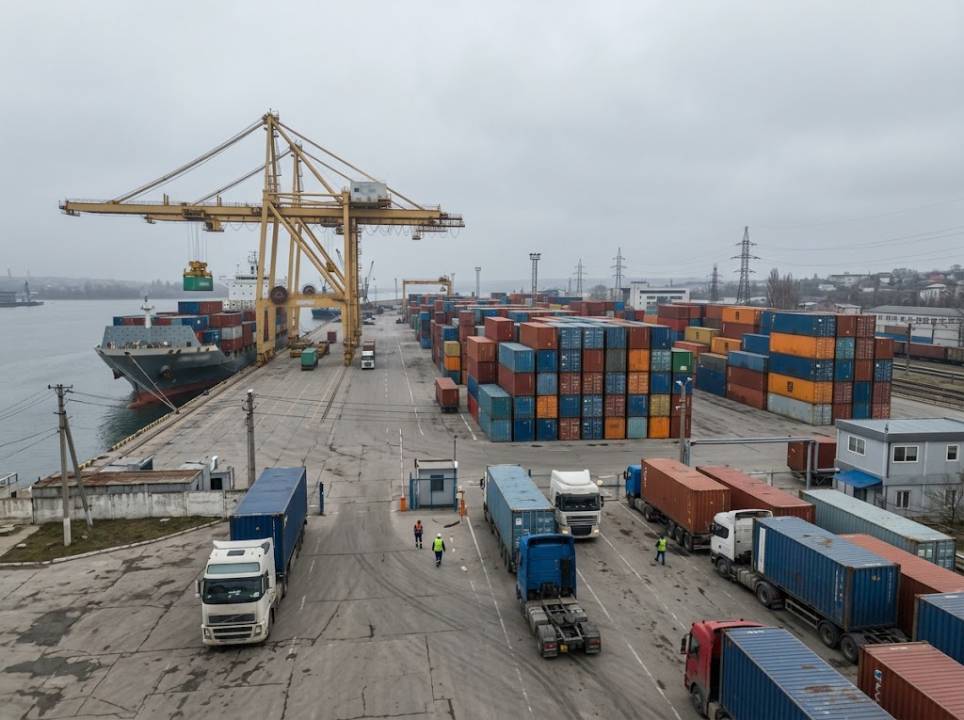
A shipment sits in customs for three extra days. A supplier invoice gets flagged for review. A procurement contract bounces back for clarification. None of these delays look like a translation problem on the surface, but trace enough of them back far enough and a surprising number start with a document that was not translated carefully.
The Documents Nobody Reads Twice
Purchase orders, customs declarations, and supplier agreements move through a company fast, often with a single pass of review before they are sent. When one of those documents crosses a language barrier, a small ambiguity can sit unnoticed until it causes a hold at a border or a dispute over payment terms.
The businesses that lose the least time on international shipments are rarely the fastest movers. They are the ones whose paperwork does not need to be re-explained.
Where German Suppliers Add Friction
Manufacturing and industrial supply chains lean heavily on German partners, and German commercial documentation tends to be precise almost to a fault. A translation that smooths over that precision to sound more natural in English can accidentally drop a specification or a liability clause that mattered.
German translation services built around technical and commercial content are trained to preserve that precision rather than simplify it away, which keeps procurement teams from having to go back and forth clarifying terms that were clear in the original.
The Case for Translation Infrastructure, Not One-Off Fixes
Companies that handle a steady volume of cross-border paperwork eventually run into the limits of sending documents out for translation one at a time. Terminology drifts between vendors, turnaround times vary, and nobody has a record of what was translated the same way last time.
Wordbeam's translation management system gives procurement and logistics teams a shared terminology base and a consistent workflow, so a term used correctly in one supplier contract stays correct across every document that follows.
What Delay Actually Costs
A day of held inventory rarely shows up as a single line item, but it compounds across storage fees, missed production windows, and strained supplier relationships. Analysis from the World Economic Forum on global trade friction has pointed to documentation and compliance delays as a recurring, underpriced cost in international supply chains.
Executives who track total landed cost closely often discover that a meaningful share of it comes from administrative friction rather than freight or tariffs themselves.
Customs Does Not Give Second Chances Quickly
Once a shipment is flagged for a documentation issue, resolving it is rarely fast. Guidance published by the World Customs Organization on trade facilitation notes that accurate, consistent documentation is one of the clearest predictors of how smoothly goods move through customs review.
A supply chain team that treats translation as a compliance function, not an afterthought, tends to see fewer of these holds in the first place.
Building It Into the Process
The companies getting this right are not necessarily spending more on translation. They are spending it earlier, treating accurate document translation as part of the procurement and logistics workflow rather than a step bolted on after a problem appears.
That shift rarely makes headlines, but it is often the quiet reason one company's supply chain runs smoother than a competitor's.